THE EMBODIMENT SERIES of 2025-2026
How Does the Embodiment of Memory Affect Therapeutic Relationships?
Françoise Davoine, PhD, Heather Ferguson, LCSW, Vincent Stephen, PsyD, Nancy Winters, MD,FIPA
with
Moderators Doris Brothers, PhD and Jon Sletvold, PsyD
SATURDAY, DECEMBER 6th, 2025
Online from 12Noon – 2:00PM/Eastern
This series is presented in collaboration with The Wilhelm Reich Center for the Study of Embodiment
ABOUT THIS EVENT
“Hysterics suffer mainly from reminiscences.”
Since Freud and Breuer pronounced this in 1895, memory is still believed to play a crucial role in the bodily as well as psychological suffering of our patients. We now understand that memory is not only verbal (declarative) but is also nonverbal (implicit). Our speakers will share how they use body-based memory in every therapeutic encounter.
Comments by the speakers about their planned talks:
Françoise Davoine, PhD:
Two sentences that I will use in my conversation:
“My delusion happens at the crossroad of my little story and the Great History.” — told by a patient.
“The Body keeps the Score,” Bessel Van der Kolk’s title, as it embodies the premature knowledge of a catastrophic stoppage of time.
Heather Ferguson, LCSW:
As Pierre Janet discovered, traumatic memories are split off from conscious awareness and stored as sensory perceptions, behavioral reenactments, and symptoms. In my work with one patient, the nonverbal iterations of traumatic memory and their sensorimotor traces infiltrated our therapeutic space, guiding our attention to her body’s long-thwarted impulses.
Vincent Stephen, PsyD:
I will focus on dissociated memories that express themselves as movements and sensations in the therapeutic context, and on embodied identification in the therapeutic relationship.
Nancy Winters, MD, FIPA:
In 1926 Freud observed: “There is much more continuity between intrauterine life and earliest infancy than the impressive caesura of the act of birth allows us to believe.” I extend this notion to the emergence of the primitive or infantile in later bodily phenomena. In several brief vignettes I discuss how embodied experience — in both patient and therapist (via somatic reverie) — can be recognized as registrations of early “remembered,” yet unsymbolized and unmetabolized, experience.
COSTS
Professionals $50
Candidates and Students $30
CE CREDIT INFORMATON
2 CONTINUING EDUCATION CREDITS ARE AVAILABLE. Instructions about how to obtain available CEs are sent out to registrants in the entry link email, prior to the event. If you miss that letter (for late sign-ups), please request CE instructions after the event.
IMPORTANT INFORMATION ABOUT ENTRY LINKS FOR ONLINE EVENTS:
Zoom entry links for this series are sent in two ways: (1) on the Registration payment receipt delivered directly to your email INBOX; and (2) manually sent out to Registrants 1-3 days prior to the scheduled event date. If you register immediately before the event’s start, you will receive the link only on the automatic payment receipt.
If you do not see a link letter in your Inbox, you should check Trash and Spam files. The Institute is not responsible for your email provider’s security settings. There are no refunds for paid events if a link was sent to you.
For general CE Credit information, click here
ABOUT OUR SPEAKERS
Françoise Davoine, PhD, has completed studies in classical literature. She has a PhD in sociology and is a professor a Sociology at the Ecole des Hautes Etudes en Sciences Sociales, where, for 40 years, she has lead a weekly seminar with Jean Max Gaudillière entitled “Madness and the Social Link.” She has been a psychoanalyst in a public psychiatric hospital and outdoor consultation, as well as in private practice in Paris for 30 years. Dr. Davoine was a member of Lacan’s “Ecole Freudienne” until Lacan’s death in 1981. She is a member of ISPS founded in 1954 by Gaetano Benedetti, and is an Erikson Scholar in the Erikson Institute at Austen Riggs Center. Her books include History beyond Trauma (Other Press with Max Gaudillière); and, several published by Routledge: Mother Folly, Fighting Melancholy: Don Quixote’s teaching: A Word to the Wise (on Don Quixote’s second book); Jean Max Gaudillière’s Seminars (2 volumes); Pandemics, Wars, Traumas and Literature; Shandean Psychoanalysis: Madness and traumas in Tristram Shandy and Wittgenstein’s Folly.
Heather Ferguson, LCSW, is a faculty member and supervisor at the Institute for the Psychoanalytic Study of Subjectivity, the National Institute for the Psychotherapies, and the Massachusetts Institute for Psychoanalysis. As a certified hypnotherapist and practitioner of EMDR, she incorporates embodied techniques into her psychoanalytic practice. She writes and lectures about eating disorder treatment, the role of intergenerational transmission of trauma, and the use of embodied techniques to deepen psychotherapeutic engagement. She has chapters in“Ghosts in the Consulting Room: Echoes of Trauma in Psychoanalysis” (edited by Harris, Kalb, and Klebanoff) and “Art, Creativity, and Psychoanalysis: Perspectives from Analyst-Artists” (edited by Hagman). She maintains a private practice in New York City.
Vincent Stephen, PsyD, is a clinical psychologist working as a therapist and supervisor at the University Hospital in Tromsø, North Norway. He specializes in psychotherapy for people struggling with complex trauma, dissociation, and serious relational difficulties. He is a candidate at the Norwegian Character Analytical Institute in Olso, a training institution for embodied psychoanalysis. Dr. Stephen is interested in the therapeutic use of countertransference and has written on language, embodiment, suicide and authenticity. He is also a multi-disciplinary artist and musician and has written and performed in various works, including several collaborations with dancer Mirte Bogaert.
Nancy C. Winters, MD, FIPA, is a training and supervising analyst of the Oregon Psychoanalytic Institute, the Northwestern Psychoanalysis Society and Institute, and is Clinical Professor of Psychiatry at the Oregon Health and Science University. She serves on editorial boards of the International Journal of Psychoanalysis (IJP) and the Psychoanalytic Quarterly. She is also co-editor and chapter author of the 2022 Gradiva award-winning Body as Psychoanalytic Object: Clinical Applications from Winnicott to Bion and Beyond (2021); Autoimmunity and its Expression in the Analytic Situation: Contemporary Reflections on Our Inherent Self-Destructiveness (IJP, 2022), and A Home to the Lie: The Contemporary Perversion of Truth (in press, American Journal of Psychoanalysis). Dr. Winters has a full-time psychoanalytic practice in Portland, OR.
ABOUT THE MODERATORS/CO-DIRECTORS OF THE WILHELM REICH CENTER FOR THE STUDY OF EMBODIMENT
Doris Brothers, PhD, is a co-founder and faculty member of the Training and Research in Intersubjective Self Psychology Foundation (TRISP). She was co-editor with Roger Frie of Psychoanalysis, Self and Context from 2015-2019 and is an associate editor of Psychoanalytic Inquiry. She serves on the council of the International Association of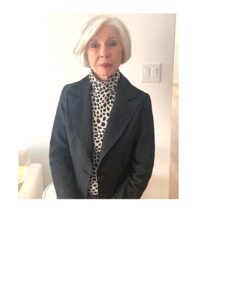 Psychoanalytic Self Psychology (IAPSP). Doris has published many journal articles and book chapters as well as four books. Her latest book, written with Jon Sletvold is entitled A New Vision of Psychoanalytic Theory, Practice and Supervision: TALKING BODIES. Her earlier books are: Toward a Psychology of Uncertainty: Trauma-Centered Psychoanalysis (2008), Falling Backwards: An Exploration of Trust and Self-Experience (1995), and with Richard Ulman, The Shattered Self: A Psychoanalytic Study of Trauma (1988). She has presented her work internationally and leads supervision/study groups with Jon Sletvold. She sees patients in private practice in New York and Oslo.
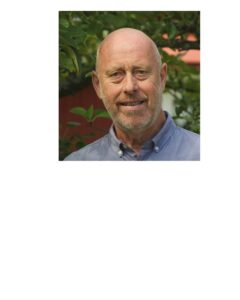
Jon Sletvold, PsyD, is founding board director and faculty member of the Norwegian Character Analytic Institute.He has written articles and book chapters on embodiment in psychoanalytic theory, practice, and training. He is the editor of four books and the author of The Embodied Analyst: From Freud and Reich to Relationality, which won the Gradiva Award in 2015. In 2019 he wrote From Muscular Armor to Bodies in Dialogue with Per Harbitz. His latest book, written with Doris Brothers is A New Vision of Psychoanalytic Theory, Practice and Supervision: TALKING BODIES. Dr. Sletvold has presented his work internationally and co-leads online supervision/study groups on embodiment in Europe, North America and China with Doris Brothers. He practices in Oslo and New York.
ABOUT THE WILHELM REICH CENTER FOR THE STUDY OF EMBODIMENT
Inspired by the pioneering work of Wilhelm Reich and encouraged by the recent surge of interest in embodiment among clinicians, co-Directors Drs. Doris Brothers and Jon Sletvold have founded the Center. With it, they are introducing an online forum for dialogues about the ways in which embodiment affects the theory and practice of psychoanalysis and psychotherapy.
A wide range of approaches to embodiment have emerged in the last two decades that have led them to believe that a “turn toward embodiment” is underway. In the interest of furthering this turn they are offering a format that differs from the usual at psychoanalytic meetings. Rather than featuring a paper presenting a specific theorist or clinician followed by discussions, they intend that each event will center around a specific topic. Speakers from around the world, each of whom employs a different perspective on embodiment, will be invited to participate in a roundtable conversation of the topic. Afterward, online participants will be encouraged to join the conversation.
Learn more about The Wilhelm Reich Center for the Study of Embodiment